
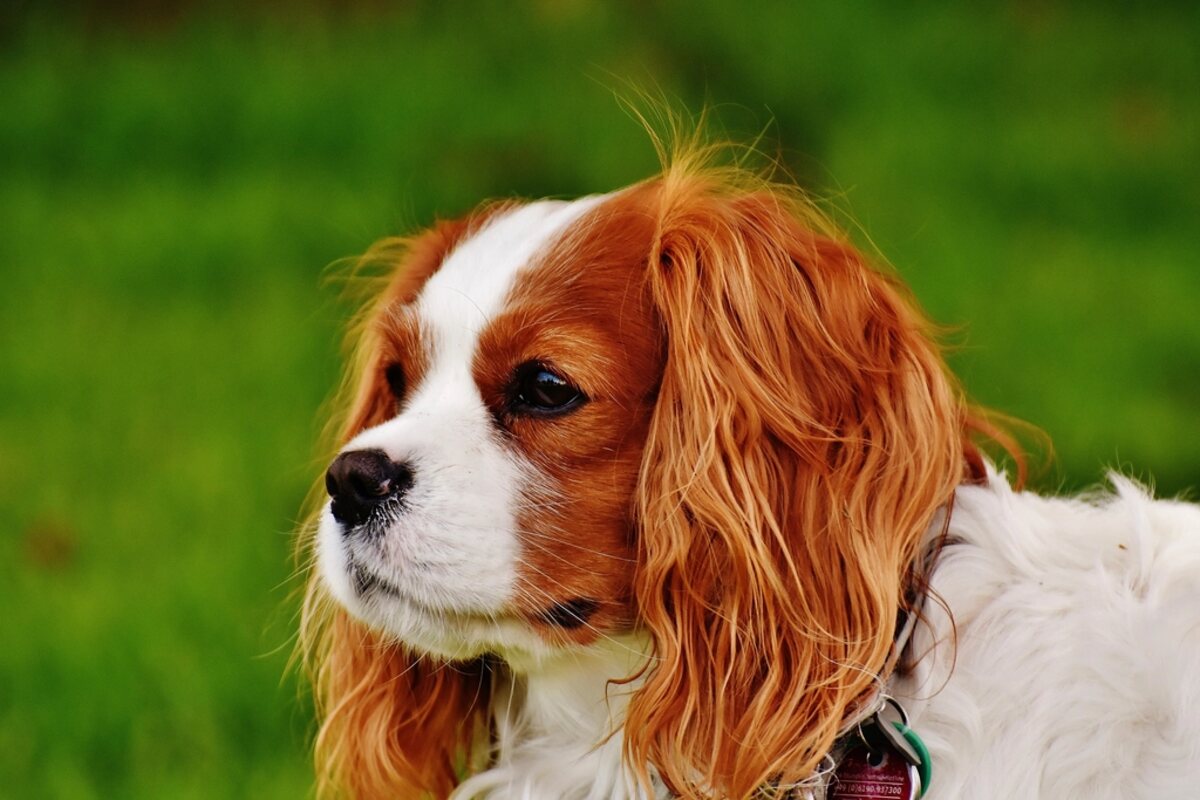
Long, drooping ears are the Cavalier's trademark and at the same time the place that needs the most regular care. An ear permanently covered by a heavy ear flap is poorly ventilated, and moisture and warmth are exactly what bacteria and fungi need.
This article explains why ear infections are common in this breed, how they are recognised, how the ear is cleaned properly and what must never be done.
Why drop ears need more care
In breeds with an upright ear, air enters the ear canal freely and dries it. In the Cavalier the ear flap covers the canal like a lid, so moisture that gets in during a bath or a walk in the rain stays there.
On top of that, the Cavalier has thick hair on the inner side of the ear itself, which holds moisture and dirt still further.
The result is that infections occur more often in this breed than average, and that they often come back if the cause is not removed.
How an infection is recognised
The signs are usually clear and appear together:
- the dog shakes its head or holds it tilted to one side
- it scratches the ear with a paw or rubs its head against furniture
- an unpleasant, sweetish smell comes from the ear
- a brown, yellow or black discharge is visible in the canal
- the inner side of the ear flap is red and warm
- the dog will not let you touch the ear or whimpers at a touch
Smell is the most reliable early sign and is noticed before anything can be seen. A healthy Cavalier ear has no smell at all.
What causes an infection
In this breed the most common causes are the following:
- Moisture after a bath or swimming. The single most common cause and the easiest to avoid.
- Allergy. In dogs with an allergy, ear infections keep coming back despite proper cleaning, and that is the most important clue that the cause is not in the ear itself.
- Excess hair in the canal, which holds moisture and prevents ventilation.
- Ear mites, more common in young dogs, with a characteristic dark discharge resembling coffee grounds.
- A foreign body, most often a blade of grass or a grass awn that gets into the canal on a walk.
How the ear is cleaned
Regularly, but not too often. For a healthy Cavalier once a week is quite enough, and after every bath.
The procedure is simple:
- lift the ear flap and put in drops of an ear cleaner made for dogs
- gently massage the base of the ear for about ten seconds; you will hear a characteristic sound
- let the dog shake its head, that is how most of the dirt comes out
- wipe only the visible part, with gauze or cotton wound around a finger
- dry the outer part of the ear and the inner side of the flap
A cotton bud must never be pushed into the canal. It pushes the dirt deeper and the canal is easily injured. Only what is visible gets cleaned.
What must not be done
- do not use alcohol, vinegar or hydrogen peroxide, as they irritate already inflamed skin
- do not use drops left over from a previous infection without a new examination
- do not clean an ear that is painful and red; that calls for a vet, not for cleaning
- do not pluck the hair out of the canal yourself, as that opens up tiny wounds
The last point often causes confusion. Plucking the hair out of the canal used to be recommended as a routine, whereas today it is done only when a vet judges it necessary.
When to see a vet
An examination is needed if:
- there is a smell, a discharge or redness
- the dog keeps shaking its head for more than a day or two
- it holds its head tilted
- the ear is painful to the touch
- the infection comes back several times a year
The vet takes a swab and determines under the microscope whether bacteria, fungi or mites are involved. This matters, because each of those three causes is treated differently, and drops that help with one do not help with another.
When infections keep coming back
This is the most common mistake in approach. If an infection appears three or more times a year, the cause is almost never in the care of the ear.
Most often it is an allergy to food or to substances in the environment. The answer then is not in drops but in identifying the allergen, and the infections stop only when it is removed.
It is also worth knowing that a dog often shows pain coming from the ear by scratching at the neck. In Cavaliers this is easily confused with a sign of syringomyelia, so the ear is always checked first.
Conclusion
A Cavalier's ears need a little attention, but regularly. One cleaning a week, drying after every bath and the rule that nothing is pushed into the canal solve most problems before they arise. If infections keep recurring anyway, the answer is not more frequent cleaning but a search for a cause outside the ear itself.
Note: this article is informational and does not replace examination and advice from a veterinarian.
Related
- Mitral valve disease (MVD) in Cavaliers: stages, signs and treatment
- Heart murmur in Cavaliers: what it means and when it is a cause for concern
- Syringomyelia and Chiari-like malformation in Cavaliers
- Why Cavaliers scratch their neck and shoulder — when it is a sign of illness
- Which health tests are required for the parents of a Cavalier litter
- The expected lifespan of the Cavalier and what affects it
- A schedule of veterinary check-ups by the age of a Cavalier
- Eye problems in Cavaliers: what occurs and how to recognise it
- Patellar luxation in Cavaliers: the slipping kneecap of small breeds
- How to read a Cavalier cardiology report
- MRI screening for syringomyelia: when, how and what the report means
- Cavalier vaccination and deworming: schedule by age
- Living with a Cavalier diagnosed with MVD
- Health of the Cavalier King Charles Spaniel — an overview of all topics
- Puppies for sale from a kennel with health-tested parents


