
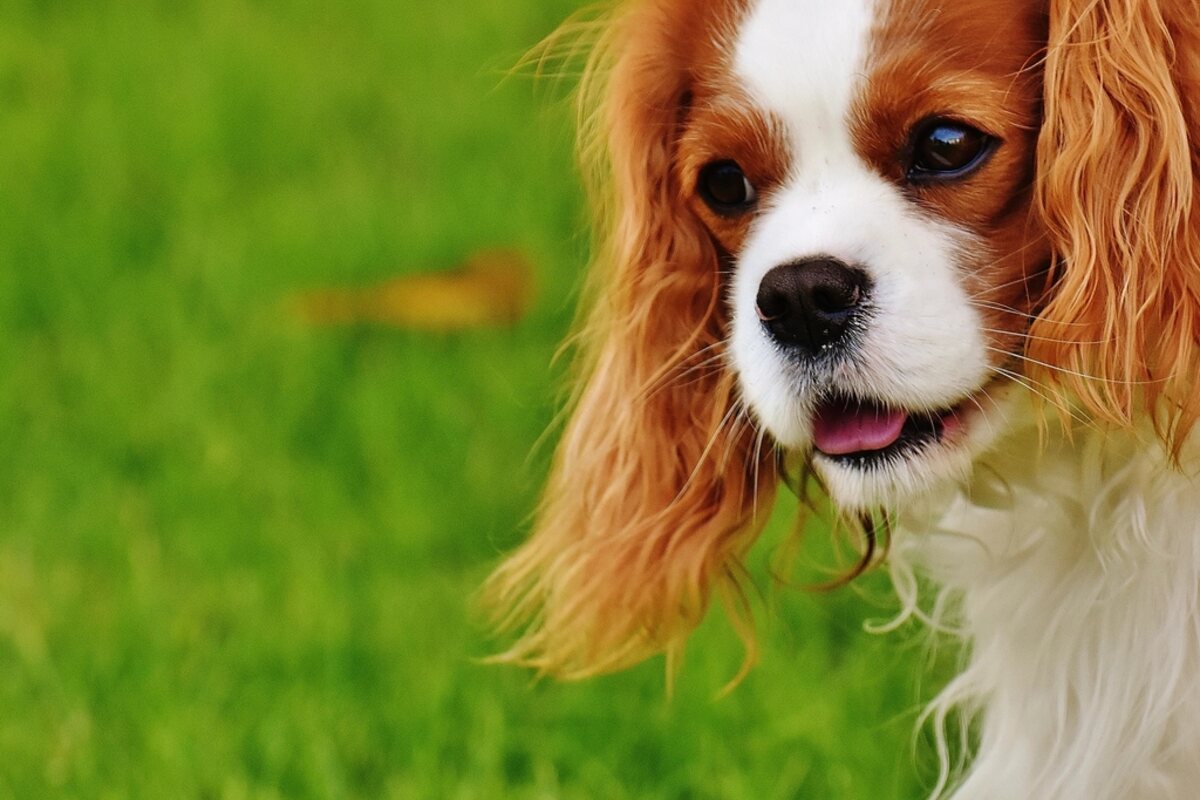
A Cavalier that persistently scratches its neck and shoulder is one of the most common reasons an owner of this breed goes to the vet. The behaviour looks harmless and is easily put down to habit, fleas or dry skin, yet in this breed it can be the first sign of a serious neurological condition.
This article helps you tell ordinary scratching from the kind that calls for an examination, and explains what the vet rules out, in order, before the most serious cause is even considered.
Ordinary scratching and phantom scratching
Every dog scratches. The difference lies in what it looks like.
In ordinary scratching the paw touches the skin, the dog scratches the spot that itches, stops after a few seconds and carries on with what it was doing. In the kind of scratching that gives cause for concern, the paw moves towards the neck but often does not touch the skin at all, or barely grazes it.
In veterinary literature this behaviour is called phantom scratching and it is the most recognisable sign of syringomyelia in Cavaliers. The dog is not seeking relief from an itch on the skin, but reacting to a sensation that comes from the spinal cord itself.
How to recognise scratching that calls for an examination
Several circumstances set this behaviour apart from an ordinary itch:
- the paw does not touch the skin, or touches it only partly
- it happens while walking, on the lead, or when the dog is excited or agitated
- it is always on the same side and always around the neck and shoulder
- the skin in that place is completely normal, with no redness, sores or flaking
- it does not stop after a bath, a parasite treatment or a change of food
- it is accompanied by occasional yelping, a stiffly held head or reluctance to jump
If three or more of these points match, a conversation with the vet about a neurological examination is justified.
What can cause scratching at the neck
Before the spinal cord is even considered, more common and more easily solved causes are ruled out. In Cavaliers these are, in order:
- Parasites. Fleas, ticks and mange are the most common cause of itching in all dogs and are checked first.
- Ear infection. Because of their long drop ears Cavaliers are prone to infections, and a dog often shows pain coming from the ear by scratching at the neck and tilting the head.
- Allergy. A reaction to food or to substances in the environment produces itching that usually also involves the paws, the belly and the area around the eyes.
- The collar. A collar that is too tight or that chafes causes irritation of the skin on the neck.
- Dry skin. In winter, with the heating on, the skin dries out and itches, but then the scratching is not tied to a single spot.
- Syringomyelia. A neurological condition in which fluid-filled cavities form within the spinal cord.
The vet resolves or rules out the first five causes in one or two visits. If the scratching remains after that, a neurological examination is next.
Why Cavaliers need extra caution
In most breeds persistent scratching at the neck almost always has a skin cause. In Cavaliers this is not the case, because the breed is particularly prone to Chiari-like malformation and syringomyelia.
In Cavaliers the back of the skull is too small for the brain, so the flow of cerebrospinal fluid at the junction between head and neck is disturbed. Under pressure the fluid breaks into the spinal cord and creates cavities that press on the nerve fibres for touch. The dog feels tingling in a place where the skin has no problem at all.
For that reason, in this breed phantom scratching is never put down to habit without an examination.
When to see a vet
An examination should not be postponed in the following situations:
- the scratching lasts longer than two weeks despite parasite protection
- the dog yelps with no visible cause, especially at night or when getting up
- it will not let you touch its neck, ear or shoulder
- it avoids stairs, jumping onto the sofa or lowering its head to the bowl
- it holds its head tilted or walks awkwardly
Note down when the scratching happens and record it on your phone. A short clip showing that the paw does not touch the skin is worth more to the vet than any description, because in the consulting room the dog often does not display the behaviour at all.
What happens at the examination
The vet first examines the skin and ears and takes swabs if there is any suspicion of infection or parasites. If the skin is normal, a neurological examination follows, testing the sensitivity of the neck and the response to touch.
When the findings point to a neurological cause, the only reliable next step is an MRI of the head and the neck part of the spine. It is done under anaesthesia and shows both the shape of the skull and any cavities in the spinal cord.
An X-ray and a blood test do not help in this case, because the cavities are not visible on them.
What if syringomyelia is confirmed
A diagnosis is not the end of a normal life. Some dogs with cavities on the scan never have serious complaints, and in those that do, the pain is in most cases well controlled with medication.
Alongside treatment, a few simple changes to daily life help too: a harness instead of a collar, the food bowl raised to chest height, a calm environment and avoiding sudden jumps.
We have written about the disease itself, the grades of the findings and the breeding recommendations in a separate article on syringomyelia.
Conclusion
Scratching at the neck in a Cavalier is not necessarily a sign of illness, but it is a sign that deserves attention in this breed. If the paw does not touch the skin, if the skin is normal and if the scratching does not stop despite parasite protection, this is probably not an itch but a sensation coming from within. An early examination then changes a great deal, because pain is easier to keep under control when you start in time.
Note: this article is informational and does not replace examination and advice from a veterinarian. For diagnosis and treatment consult your vet, preferably a specialist in neurology.
Related
- Mitral valve disease (MVD) in Cavaliers: stages, signs and treatment
- Heart murmur in Cavaliers: what it means and when it is a cause for concern
- Syringomyelia and Chiari-like malformation in Cavaliers
- Which health tests are required for the parents of a Cavalier litter
- The expected lifespan of the Cavalier and what affects it
- A schedule of veterinary check-ups by the age of a Cavalier
- Eye problems in Cavaliers: what occurs and how to recognise it
- Patellar luxation in Cavaliers: the slipping kneecap of small breeds
- Ear problems in Cavaliers — why drop ears need more care
- How to read a Cavalier cardiology report
- MRI screening for syringomyelia: when, how and what the report means
- Cavalier vaccination and deworming: schedule by age
- Living with a Cavalier diagnosed with MVD
- Health of the Cavalier King Charles Spaniel — an overview of all topics
- Puppies for sale from a kennel with health-tested parents


