
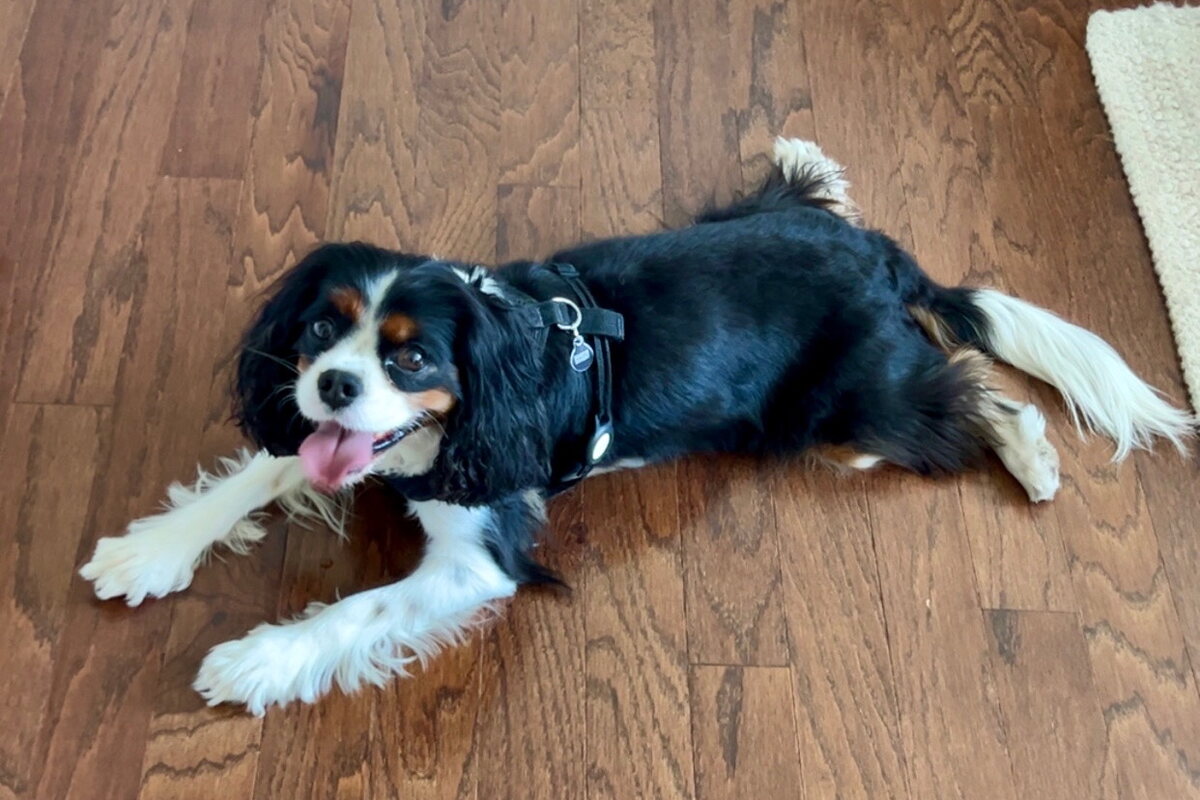
A diagnosis of mitral valve disease does not mean a countdown has begun. Most Cavaliers with that diagnosis live normally for years, go for walks, eat with appetite and behave just as they did before the examination.
This article is for owners who have just left the consulting room with a report and are wondering what changes now in daily life. The short answer: less than you think, but a few things do matter.
First: which stage
Everything that follows depends on one thing, and that is the letter in the conclusion of the report.
Stage B1 means a murmur is present but the heart is not enlarged. In practice nothing changes. The dog has no treatment and goes for a check-up once a year.
Stage B2 means the heart is enlarged but the dog has no symptoms yet. Medication is introduced and daily life stays much the same.
Stage C means heart failure has developed. This is where daily life changes most and where the advice below matters most.
Medication and how not to forget it
Treatment is given for life and at the same time every day. With cardiac medicines consistency matters more than with most others.
A few things that help:
- tie giving the medicine to something you do at the same time anyway, for example the first morning walk
- set a reminder on your phone and do not switch it off once you get used to it
- keep a few days' supply in reserve so a holiday or a weekend does not catch you out
- if you miss a dose, do not double the next one but ask your vet
Treatment is not stopped because the dog looks better. The medicine is exactly what makes the dog look well, so stopping removes precisely what has been achieved.
Counting breaths — the most useful habit
This is the only measurement an owner takes themselves, and cardiologists value it most.
While the dog sleeps quietly, count how many times the chest rises in one minute. A healthy dog breathes fewer than thirty times a minute in sleep.
Measure once a week while the dog is stable, and write it down. When you see a value that is higher than usual for your dog several days running, that is a reason to get in touch, even if the dog seems fine.
This figure often notices a change before anything else does.
Exercise
A dog with a diagnosis still needs to move. Rest does not protect the heart; it weakens the muscles and makes the dog fat.
The rule is simple: let the dog set its own pace. Walks on level ground, of moderate length, several shorter ones instead of one long. Running uphill, long chases after a ball and exertion in the heat are avoided.
If the dog stops on a walk, sits down or asks to turn back, that is a sign it has reached its limit, not stubbornness. Respect it and cut the walk short.
Weight and diet
This is the single biggest contribution an owner can make.
Every extra kilo in a seven-kilo dog is a load the heart carries with every step. In a dog with an enlarged heart that is no small matter.
- weigh the dog once a month and write it down
- the ribs should be felt by running the palm lightly over them, without pressing
- count treats as part of the daily ration, not as an extra
- avoid salty snacks from the table, cured meat and pretzels
In dogs at stage C the vet sometimes recommends a lower-salt diet. At earlier stages this is usually not necessary, but obviously salty things from the table are not given then either.
What helps around the house
A few small things reduce effort the dog does not even notice it is making:
- a harness instead of a collar, because a collar presses on the neck when the dog pulls
- a ramp or steps up to the sofa and the bed
- water always available, because some cardiac medicines increase thirst and urination
- a sleeping place in a quiet part of the flat, away from draughts
- avoiding time outdoors in great heat
When to get in touch immediately
This is the part worth remembering or printing out. Do not wait for the next scheduled appointment if any of these appear:
- breathing in sleep persistently over thirty breaths a minute
- a cough that has appeared or worsened, especially at night
- laboured breathing, open-mouth breathing at rest
- sudden tiring on the usual walk
- fainting or stumbling
- a swollen belly
- pale or bluish gums and tongue
The last three are emergencies and require a visit to the vet the same day.
Check-ups
The interval is set by the cardiologist according to the stage. Once a year is usual at B1, every six to twelve months at B2, and more often at stage C.
Bring to the appointment a list of medicines with doses, your record of counted breaths and the weight figures. That shortens the examination and makes it more accurate.
What to tell the household
If there are children in the house or several people feed the dog, an agreement matters more than any advice above.
It is enough that everyone knows three things: that the dog gets its medicine at an exact time, that treats are not given outside the agreement, and that the dog is not pushed to run when it slows down.
Conclusion
A Cavalier diagnosed with mitral valve disease at the earlier stages lives practically normally, and the owner has three concrete tasks: that the medicine is given at the same time every day, that the dog does not gain weight, and that the breaths in sleep are counted once a week. That is all. The rest is done by the treatment and by regular check-ups.
Note: this article is informational and does not replace examination and advice from a veterinarian. Treatment, dosing and the interval between check-ups are determined solely by the vet, preferably a specialist in cardiology.
Related
- Mitral valve disease (MVD) in Cavaliers: stages, signs and treatment
- Heart murmur in Cavaliers: what it means and when it is a cause for concern
- Syringomyelia and Chiari-like malformation in Cavaliers
- Why Cavaliers scratch their neck and shoulder — when it is a sign of illness
- Which health tests are required for the parents of a Cavalier litter
- The expected lifespan of the Cavalier and what affects it
- A schedule of veterinary check-ups by the age of a Cavalier
- Eye problems in Cavaliers: what occurs and how to recognise it
- Patellar luxation in Cavaliers: the slipping kneecap of small breeds
- Ear problems in Cavaliers — why drop ears need more care
- How to read a Cavalier cardiology report
- MRI screening for syringomyelia: when, how and what the report means
- Cavalier vaccination and deworming: schedule by age
- Health of the Cavalier King Charles Spaniel — an overview of all topics
- Puppies for sale from a kennel with health-tested parents


