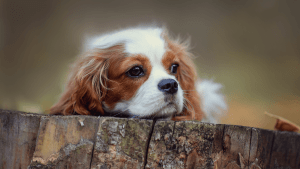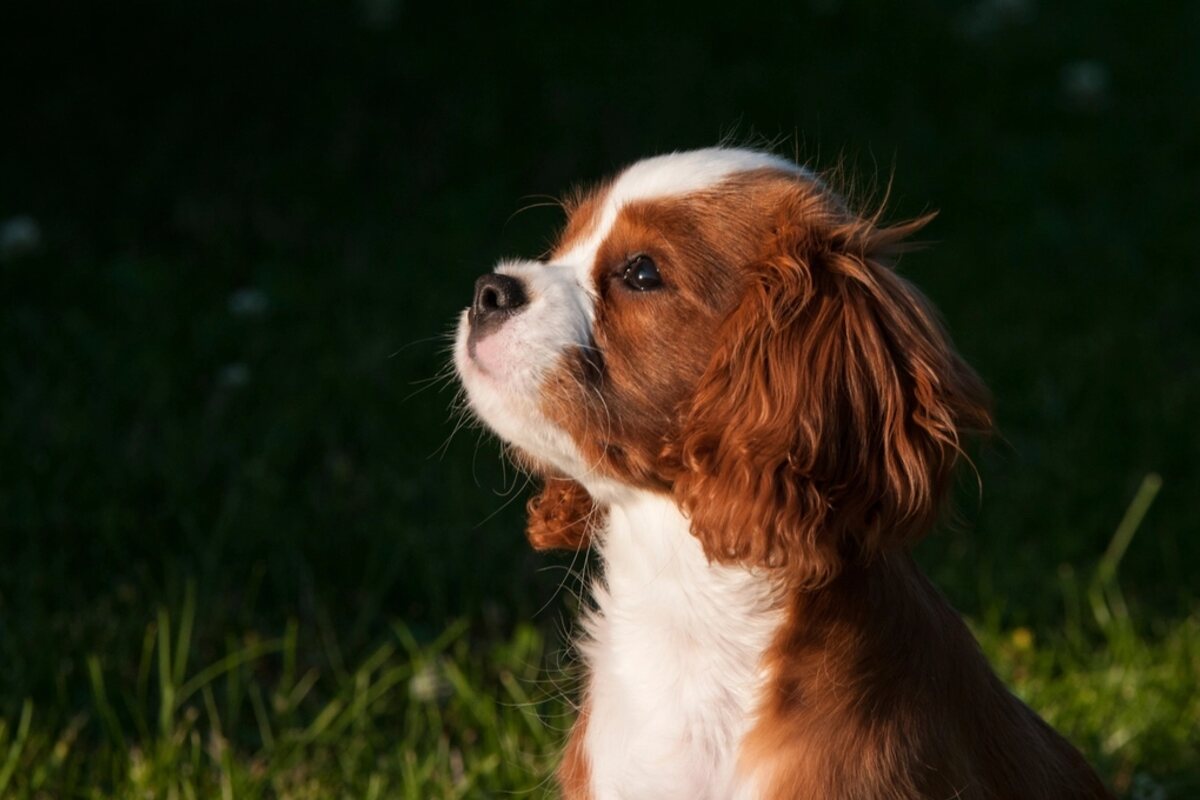
A Cavalier does not tire from walking alone. A dog with enough walks but nothing to do with its head still pesters, chews and demands attention — because it lacks a different kind of tiredness.
This article explains why mental tiring works better than an extra kilometre, which games suit this breed, how to make tasks from things you already own and which games to avoid in a small breed.
Why the head tires more than the legs
Fifteen minutes in which the dog solves a task with its nose tire it about as much as half an hour of walking. Scent engages the largest part of a dog’s brain, and problem-solving burns energy that repeating the same loop around the building does not.
The practical consequence: for a dog that is “never tired” the answer is usually not a longer walk but a harder walk — slower, with sniffing and a few tasks along the way.
What suits this breed
The Cavalier was bred to be company for people, not to work independently. That determines the kind of games it likes.
Everything that involves vasworks exceptionally well: fetch, searching for hidden things, learning tricks, exercises done together. Everything the dog is supposed to do alone for hours works less well — such toys entertain it for ten minutes and then get abandoned.
The breed also has a mild hunting instinct and a good nose, so scent games go down better than in many small breeds.
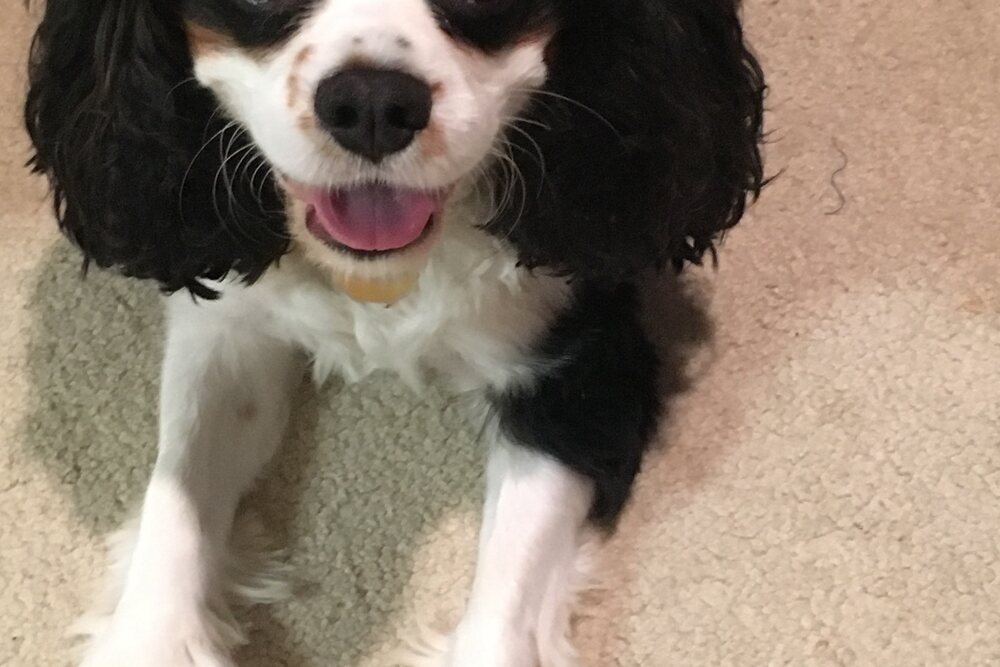
Games that require nothing to be bought
Find the treat. Scatter a few pieces around the room while the dog waits in another one, then let it in. Start with visible pieces, then hide them ever harder.
The towel with treats. Wrap a few pieces in a towel and roll it up. The dog unrolls it with its nose and paws. It lasts longer than it looks.
Three cups. A treat under one of three upturned cups; the dog chooses with its nose. Cavaliers pick this up quickly.
A snuffle mat from an old T-shirt. Strips of fabric pulled through a rubber doormat, treats between them. Machine washable.
The meal as a task. Instead of a bowl, the daily ration is scattered on the grass or hidden around the flat. One meal like that replaces a whole play session.
Tricks. Give a paw, spin, weave between the legs, touch the palm with the nose. In a breed that lives for praise this is both a game and a bond.
Fetch and tug
Fetch is the favourite game of most Cavaliers, with one rule: do not throw the ball far and low across a slippery floor. Sudden braking and turning on parquet is a classic way for a small dog to injure a knee.
Outdoors, on grass, throw short and low. Avoid high throws that the dog catches in mid-air and lands on one leg.
Tug of war is allowed and useful, with two precautions: do not jerk sideways and upwards, because in a small breed that strains the neck and teeth, and teach a release command so the game has an end.
What to avoid in a small breed
- Jumping for a frisbee. Landing from a height does not pass without consequences in a dog of this build.
- Long runs alongside a bicycle, especially in a young dog.
- The laser pointer. The dog chases something it can never catch, so instead of satisfaction it develops tension and obsessive behaviour. This is one of the few games that does harm.
- Rough play with much bigger dogs, where one clumsy knock bowls the Cavalier over.
How much and when
It is enough to have ten to twenty minutes of tasks a day, in two or three short sessions. It is not a substitute for the walk but an addition to it.
The best moments are just before the time the dog usually gets restless, and before it is left alone. A tired dog falls asleep more easily in an empty flat.
Every session ends while the dog is still interested. A game stopped at its best moment stays interesting tomorrow.

Toys: less is more
Ten toys on the floor at once means ten boring toys. Keep them divided into two or three groups and swap them weekly — an old toy after a break feels like a new one.
For this breed choose softer rubber and plush toys of an appropriate size. Hard plastic and bone toys break teeth in a small jaw. Plush toys are allowed only under supervision, because the stuffing gets swallowed.
The puppy and the older dog
Kod the puppy play is also training. Sessions of two to three minutes, because anything longer is not play but tiring the dog out.
Kod the older dog mental games become more important than before, because the body no longer takes the strain while the head still wants a job. Searching for treats and light nose work are ideal — the dog stays engaged without loading the joints.
Conclusion
Alongside an hour of walking, a Cavalier needs ten to twenty minutes of tasks for the head — ones that involve you: scent searching, tricks, the meal as a game. Fetch and tug are good within the limits set by a small frame: low, on grass, without sideways jerks. The one game to cut out entirely in this breed is chasing a laser dot.