
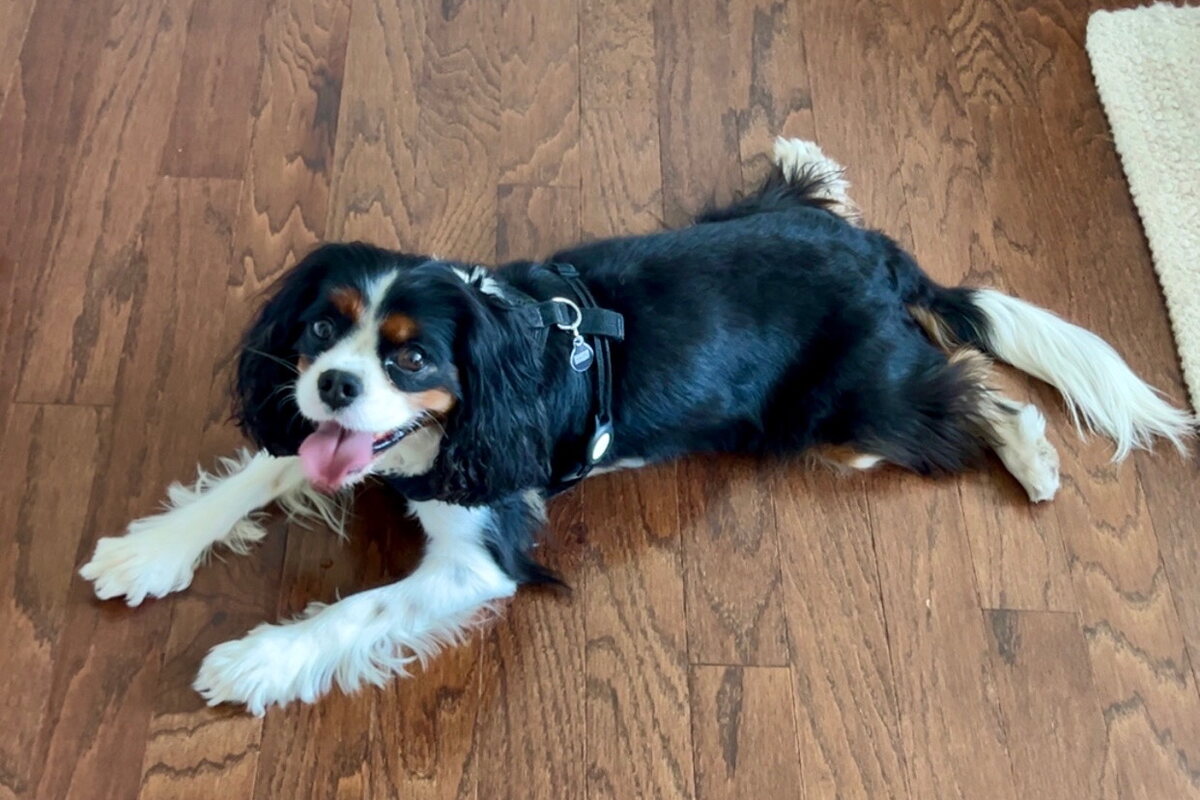
The Cavalier is one of the few breeds that genuinely suit a flat. It is small, not noisy without reason, and what it wants most is to be in the room you are in. Floor area matters less than layout.
This article is about the space itself: where the dog sleeps, why a smooth floor is a problem in this breed, what to do about stairs and the sofa, and which household hazards are most often overlooked.
How much space is needed
Less than people think. A studio flat is enough for a Cavalier on one condition — that it gets out regularly.
What does not suit this breed is not a small flat but long spells alone. The Cavalier was bred to be beside people and copes badly with being alone all day, in a flat of any size.
A slippery floor — the biggest problem indoors
Parquet, laminate and tiles are a genuine health risk in this breed, not a trifle.
The reason is twofold: in the Cavalier hair grows between the pads and it creates a slippery layer under the paw, and the breed is prone to slipping kneecaps. A dog that skids when turning sharply loads the knee in exactly the wrong way.
What helps:
- trim the hair between the pads, with round-tipped scissors, level with the pads
- runners and rugs along the main routes — from the bed to the door, around the bowls, in front of the sofa
- a mat where the dog jumps down
- nails kept short, because a long nail changes the position of the paw
Where the dog sleeps
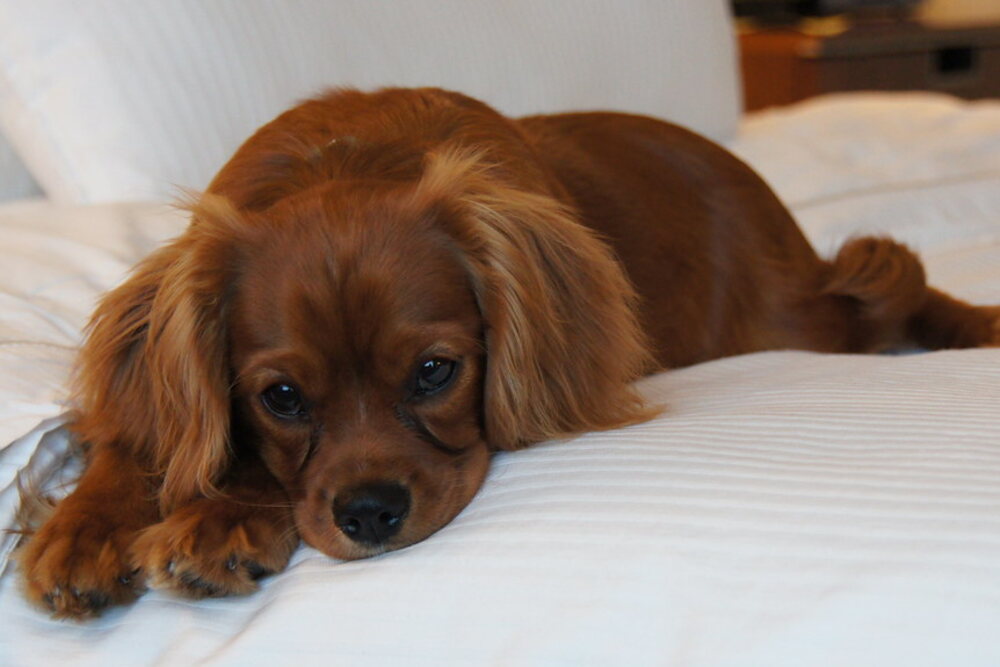
The bed goes in the room where the family is, not in an isolated corner. A breed that wants company will not use a spot from which it cannot see you.
A good spot has three qualities: out of a draught, out of the main thoroughfare, and with a view of the room. The corner beside the sofa is almost always a direct hit.
It is useful to have two resting places — one in the living room, one where you spend the evening. That way the dog does not have to choose between resting and company.
The bed should have a rim the dog can rest its head on; most Cavaliers sleep leaning against something. A removable, washable cover saves a lot of work.
The sofa and the bed
This is a decision made once and not changed. A dog that has slept in your bed for a year does not understand why it suddenly may not.
If the answer is yes, the only real precaution is a ramp or a step. Jumping down from a height strains the shoulders and knees in a small breed, and landing on a slippery floor is a common cause of injury. A ramp is used even with a young dog, and with an older one it becomes essential.
If the answer is no, the dog must have its own comfortable place in the same room — otherwise it will keep trying.
Stairs
With a puppy, stairs are avoided in the first year, especially going down, which strains the front legs and shoulders more than climbing. Carry the puppy down the stairs while it is growing.
In a healthy adult dog stairs are not a problem, but they are limited in a dog with knee or back trouble. A safety gate at the top of the stairs settles the matter once and for all.
Food and water
The bowls go in a quiet spot, out of the thoroughfare and away from the bed. A dog eating where people constantly walk past eats quickly and nervously.
For a Cavalier the right choice is a shallow, wide bowl, because long ears fall into a narrow one. There are also bowls with a cut-out at the side, made precisely for drop-eared breeds.
A non-slip mat goes under the bowls. Water must be available at all times and is changed daily.
Household hazards that get overlooked
- The balcony. A gap between the railings that a puppy’s head fits through is a hazard, and a low parapet is an invitation to jump. Netting or Perspex is the only reliable solution.
- Tilted windows. A dog that climbs up and slips through the opening gets stuck — a common and severe injury.
- House plants. Dieffenbachia, philodendron, ivy, poinsettia, tulips and lilies are toxic to dogs.
- Cables. Especially while the puppy is teething. Cable trunking is paid for once.
- Medicines and chocolate within reach, on the coffee table or in a bag on the floor.
- Bags and threads, which get swallowed and end in surgery.
- The washing machine. A small dog climbs in to sleep. The door is kept closed.
A corner of its own
It helps if the dog has a place to retreat to when things get busy — when guests arrive, when the children are playing, when the vacuuming is done.
It can be a carrier with the door open, a bed under the table or a fenced-off corner. The rule is that that place belongs to the dog and no one disturbs it there, not even the children. A dog that has somewhere to withdraw to does not build up tension.
When it is left alone
The space is arranged so that being alone is easier, not merely safe:
- limit part of the flat until the dog shows it can be trusted
- leave a food toy that occupies the first twenty minutes or so, because the beginning is the hardest
- the curtain drawn if the dog barks at passers-by, or the opposite — a spot with a view if that calms it
- a radio or quiet music masks the noises from the building
Conclusion
A small flat suits a Cavalier fine if it gets out regularly and is not alone all day. The most important change to the space is not equipment but dealing with the slippery floor — runners along the main routes and trimmed hair between the pads, in a breed prone to slipping kneecaps. Along with that go a ramp instead of jumping off the sofa, a shallow bowl because of the long ears, and a resting place in the room you are in.
Related
- How much exercise a Cavalier needs each day
- Play and mental stimulation for the Cavalier
- Travelling with a Cavalier: car, plane and paperwork
- Patellar luxation: slipping kneecaps in small breeds
- How long a Cavalier can be left alone at home
- Cavalier care — an overview of all topics
- Puppies for sale from a kennel with health-tested parents


