
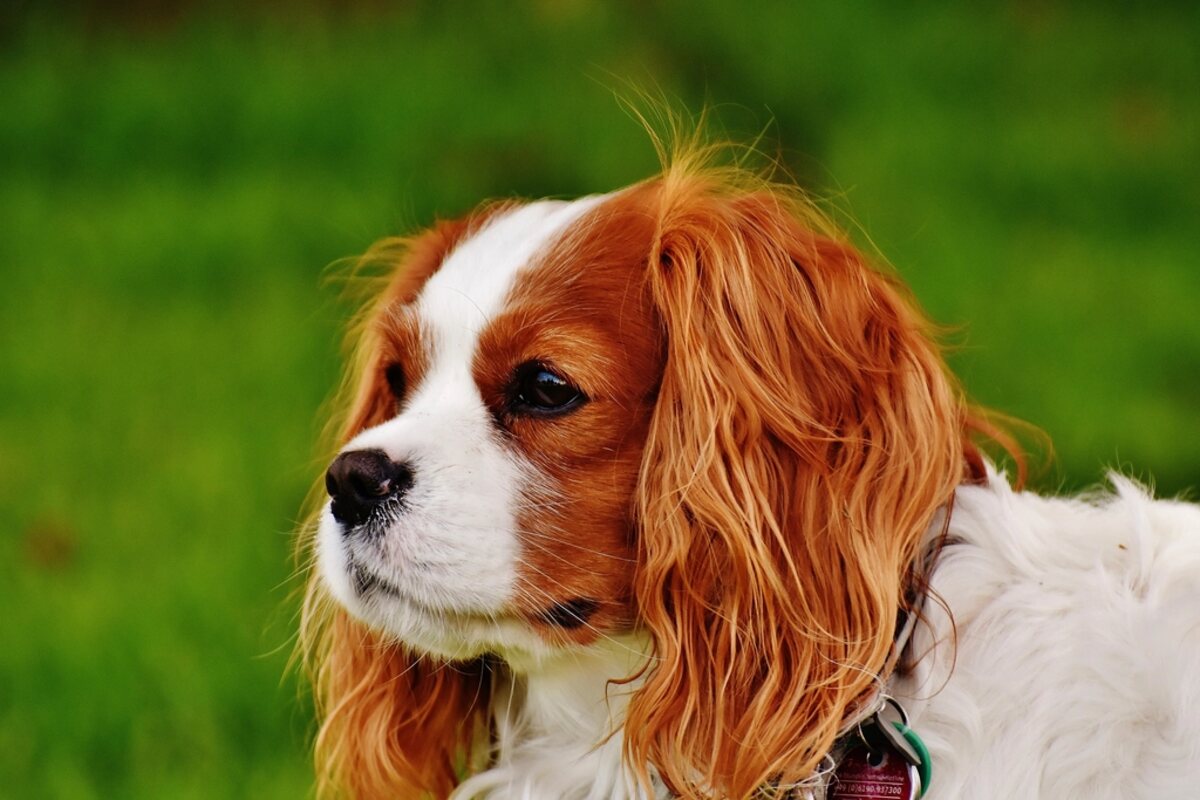
The Cavalier is a good travelling companion. It is small, adaptable and happiest when it is with you, so it rarely causes trouble on a trip. What needs preparation is the paperwork, the way it travels and the heat.
This article covers travelling by car, motion sickness, flying, the paperwork for leaving the country and accommodation — and what to do if the dog stays at home after all.
By car
The dog does not travel loose in the car. That is dangerous for it and for the driver, and in a sudden braking a small dog in flight means a serious injury.
Three safe ways:
- A carrier, secured, ideally in the boot or on the floor behind a seat. The safest option.
- A safety harness belt that clips to the harness, never to the collar.
- A barrier for the boot in an estate car.
The dog never travels in a front seat with an airbag.
On a longer journey you stop every two to three hours — toilet, water and a short stretch. The dog is taken out of the car strictly on a lead, because a motorway service area is where dogs most often get lost.
Motion sickness
It is common in puppies and largely passes by one year, as the inner ear develops.
The signs are drooling, restlessness, panting and yawning before vomiting sets in.
What helps:
- the dog does not eat for two to three hours before the trip, but water stays available
- a forward view, not sideways — a carrier from which the dog sees through the windscreen is better than a side window
- a little fresh air and a lower temperature in the cabin
- driving without sudden braking and sharp bends
- getting used to it through short drives to nice places, so the car does not only mean the vet
If nothing helps, the vet has an anti-nausea medicine for dogs. Human anti-nausea medicines are not given to a dog without a vet.
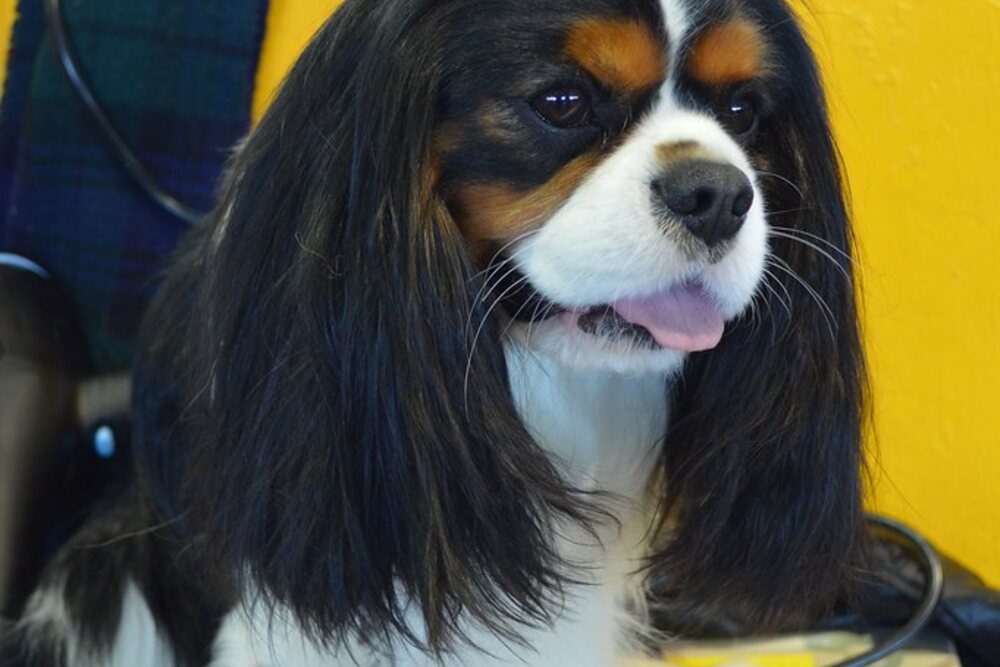
Heat — a rule without exception
The dog is never left in a parked car. Not for five minutes, not in the shade, not with the window ajar.
At twenty-five degrees the interior passes forty in under fifteen minutes. In the Cavalier, which sheds heat less easily because of its shorter muzzle, it goes faster than in most breeds.
By plane
The advantage of a small breed is that the Cavalier generally fits within the limit for travel in the cabin — with most airlines up to eight kilograms including the bag.
What to know:
- rules differ from airline to airline and change — check directly with the carrier, and before buying the ticket
- a place for the dog in the cabin is booked in advance; the number is limited
- the bag must meet the prescribed dimensions and fit under the seat
- the dog is accustomed to the bag weeks in advance, at home
- do not feed immediately before the flight; offer water up to departure
Travel in the hold is riskier for short-muzzled breeds than for others, and many airlines do not accept such breeds for it. The Cavalier is in the milder category, but if the trip can be avoided or made by car, that is the better choice.
Sedatives are not given before a flight without explicit instruction from a vet — at altitude they alter breathing and blood pressure.
Papiri
To leave the country the dog needs:
- microchip, implanted before the rabies vaccination for the vaccination to be valid
- a valid rabies vaccination, with the prescribed waiting period after the first one
- a pet passport or an international veterinary certificate, depending on the country
- for some countries also a rabies antibody test, which requires planning months in advance
- for some also a tapeworm treatment within a precisely defined window before entry
Regulations differ by country and change. Check the exact conditions for the particular country and date with your vet and with the competent veterinary authority, in good time — some steps cannot be speeded up.
What to pack
- the food the dog already eats, in sufficient quantity — a change of food on a trip means diarrhoea
- bowls, a folding one for water
- harness, lead, spare lead
- the bed or a blanket with a familiar smell
- the medicines the dog takes, with instructions
- the papers, as a copy and on the phone
- bags, a towel, a brush
- a tag with your phone number — on a trip it matters more than at home
Before the trip it is worth checking that the details registered with the microchip are correct and that the phone number is not out of date.
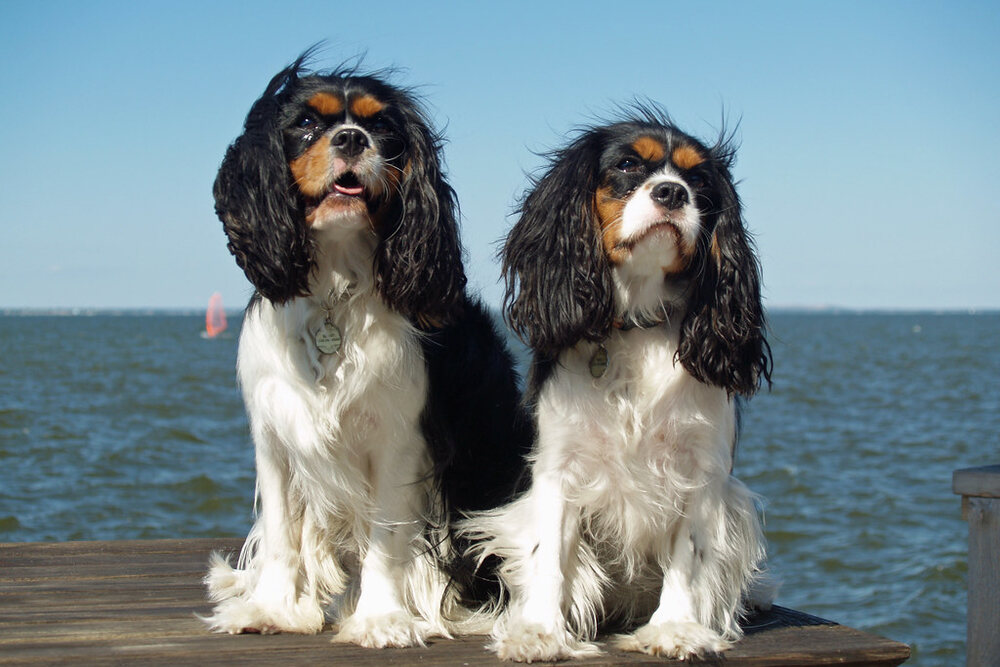
Accommodation
The dog is declared at booking, not on arrival. “Pets allowed” often means for a surcharge, with a weight limit, or with a ban on leaving the dog alone in the room.
The last point matters for a Cavalier: the breed copes badly with solitude and in an unfamiliar space it may howl. If you plan to go out without the dog, it is worth trying that at home before the trip.
If the dog stays at home
For a breed this attached to people, care in familiar surroundings is almost always better than boarding kennels. Someone who comes to your flat or stays in it is the first choice.
Whatever you choose, the person looking after the dog should have: the feeding schedule, instructions for medicines, your vet’s number and your own. The introduction happens before the trip, not on the day of departure.
Conclusion
A Cavalier travels easily: in the car secured or in a carrier, with a break every two to three hours, and with the absolute rule that it is never left in a parked car. For flying it generally fits in the cabin, but the conditions are checked with the carrier before buying the ticket. The paperwork — chip, rabies and passport — is planned months ahead, because some steps have deadlines that cannot be shortened.
Note: the conditions for travelling with a dog differ by country and change. This text is general information only — check the exact conditions with your vet, the carrier and the competent veterinary authority.


