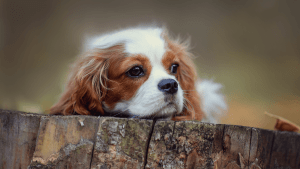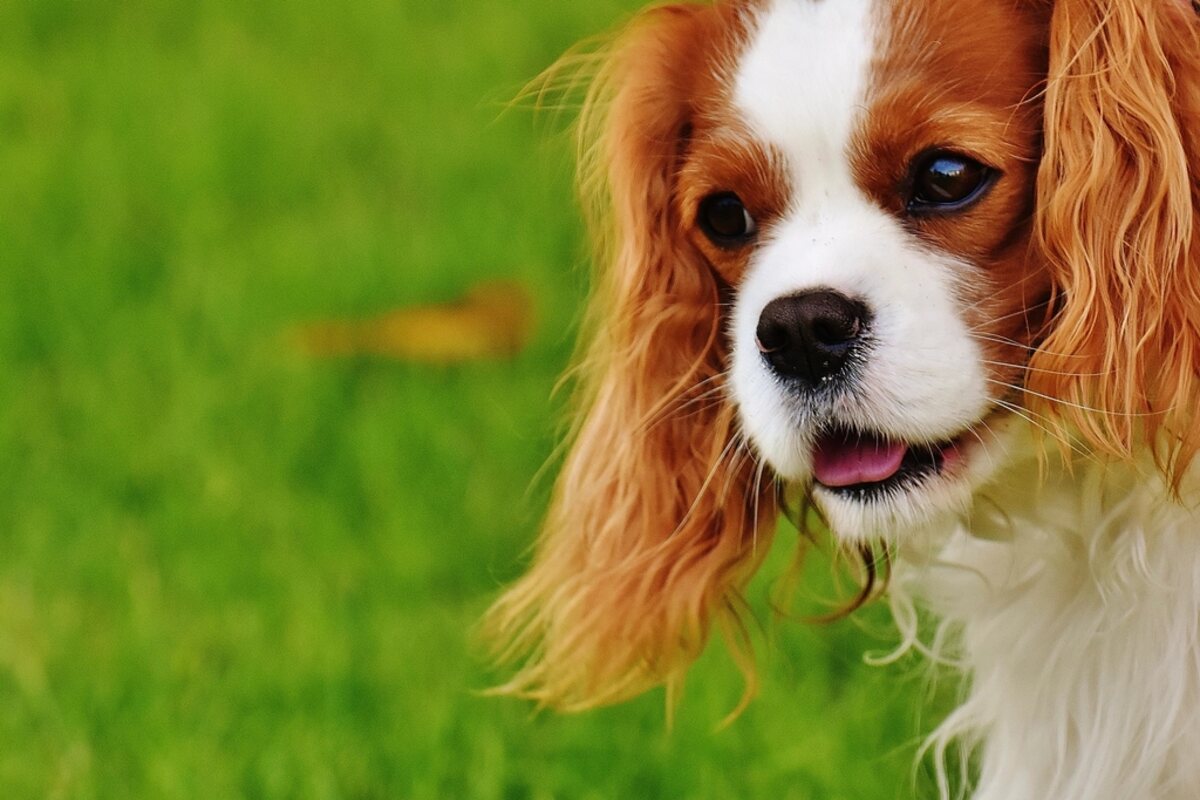
House training is not a matter of the dog’s intelligence but of the owner’s patience and the size of the bladder. A puppy physically cannot hold on for long, and until the muscle that retains urine matures, no amount of training changes that.
This article explains how long a puppy can realistically hold on, what a daily routine that works looks like, why puppy pads slow things down and what to do when an accident happens indoors.
How long a puppy can hold on
A rough calculation that has proved accurate: the number of months of age plus one, in hours. A two-month-old puppy holds on for about three hours, a three-month-old for about four.
That is the upper limit at rest, not a schedule. After sleeping, eating, drinking and excited play the puppy must go out regardless of how much time has passed.
Full control is achieved in most dogs between the fourth and sixth month. Night-time control usually comes before daytime control.
The daily routine
Going out is compulsory at these moments:
- immediately on waking, in the morning and after every nap
- ten to twenty minutes after every meal
- after every lively game
- before bedtime
- and in between, every two to three hours in the first weeks
In the first weeks that also means one outing during the night. It is temporary and passes within a few weeks.
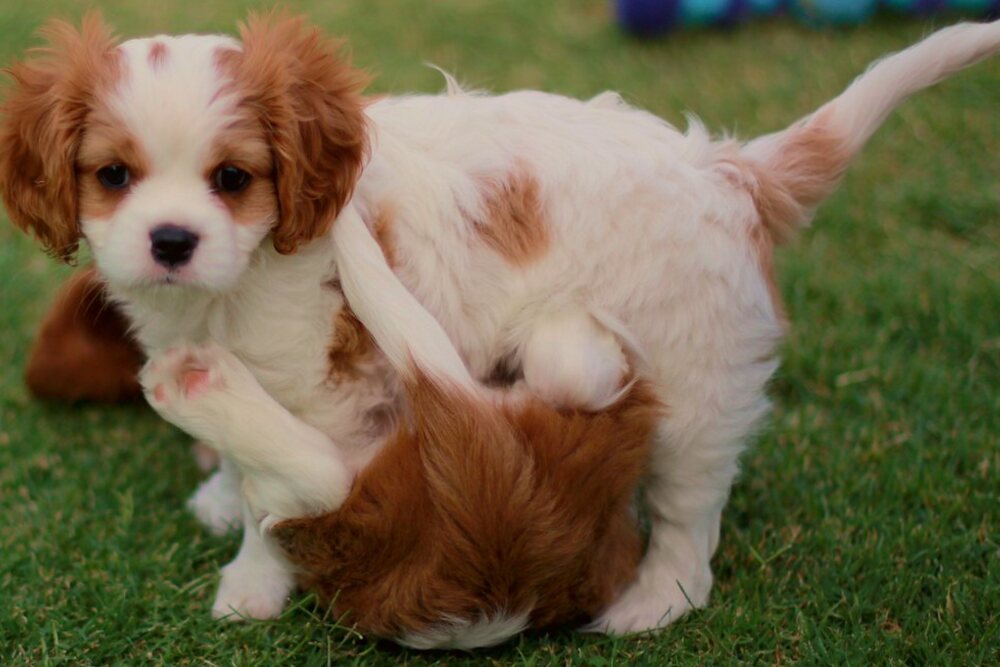
What a successful outing looks like
Always to the same spot. The smell from last time is the strongest reminder a puppy has.
Stand still and do not entertain the dog while it is doing its business. Play begins afterafterwards, not before.
When the puppy finishes — praise at that very moment, not when you get back indoors. A dog links a reward with what it was doing three seconds ago, not three minutes ago.
If you always say the same word while it happens, after a few weeks the puppy starts to understand it as a cue — useful when travelling and in bad weather.
Why puppy pads slow things down
A pad solves your problem now and creates a problem for the dog later. It teaches the puppy that relieving itself indoors is acceptable, just on a particular surface. Later that has to be unlearned too, so the job is doubled.
There are situations where they are justified — a high floor in a building with no lift, an owner with limited mobility, a puppy that has not had all its vaccinations. In those cases the pad is placed in one place, as far as possible from the food and the bed, and gradually moved towards the door and then outside.
If circumstances allow, going outside from day one settles the matter faster and once and for all.
When it happens indoors
It will happen, and more than once. What matters is what you do then.
If you catch the dog in the act: interrupt with a soft sound, not a shout, pick it up and carry it outside. If it finishes there — praise.
If you find the puddle afterwards: do nothing. The dog does not make the connection. Scolding at that moment only teaches the puppy that your arrival is unpredictable, and in a sensitive breed like the Cavalier it can lead to the dog hiding to relieve itself — a worse problem than the one you were solving.
Never push the dog’s nose into the puddle. It teaches nothing and damages trust.
Cleaning is part of the training
A dog returns to where it smells the scent, and its nose is incomparably better than yours. So the choice of cleaner is not a trifle.
- use an enzymatic cleaner made for dogs — it breaks down the substances that leave the smell, it does not mask them
- never an ammonia-based product. Ammonia smells similar to urine and tells the dog that this is the right spot
- plain water and detergent remove the stain but not the smell

When a setback is normal and when it is not
A puppy that was clean for a week and then goes back to old habits is a common occurrence. The causes are usually a move, a guest in the house, a new dog, a change of routine or the teething period.
The answer is to go back to more frequent outings for a few days, without scolding.
A vet is needed if:
- štene urinates often and in small amounts and seems to be in discomfort
- the urine is dark, cloudy or bloody
- a dog that was completely clean suddenly stops, with no change in circumstances
- the puppy drinks unusually large amounts of water
In female puppies a urinary tract infection is a common cause of “disobedience” wrongly blamed on training.
What speeds things up
- Supervision. A puppy roaming freely through the whole flat will relieve itself in the room you are not in. A limited space in the first weeks reduces the number of accidents.
- Regular meals. Food at the same time means relieving itself at a predictable time.
- Water available, but not right before bed. The last drink an hour or two before the night.
- Recognising the signs. Sudden sniffing of the floor, circling and heading for a corner mean you have fifteen seconds.
Conclusion
A puppy holds on for roughly as many hours as it has months plus one, so outings are tied to sleeping, eating and play rather than to the clock. The reward is given outside at the moment the dog finishes, and an accident indoors is cleaned up quietly with an enzymatic cleaner. In the Cavalier, a sensitive breed, scolding at this stage speeds up nothing and can produce a dog that hides — which is harder to repair than to teach.
Related
- Cavalier puppy training: the first month
- Recall training: how to teach your Cavalier
- Socialising a Cavalier puppy
- Nipping and chewing in Cavalier puppies, and damage at home
- A Cavalier in a flat: how to set up the space
- Cavalier care — an overview of all topics
- Puppies for sale from a kennel with health-tested parents