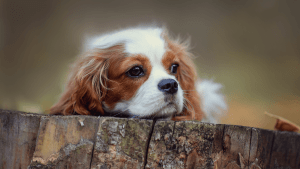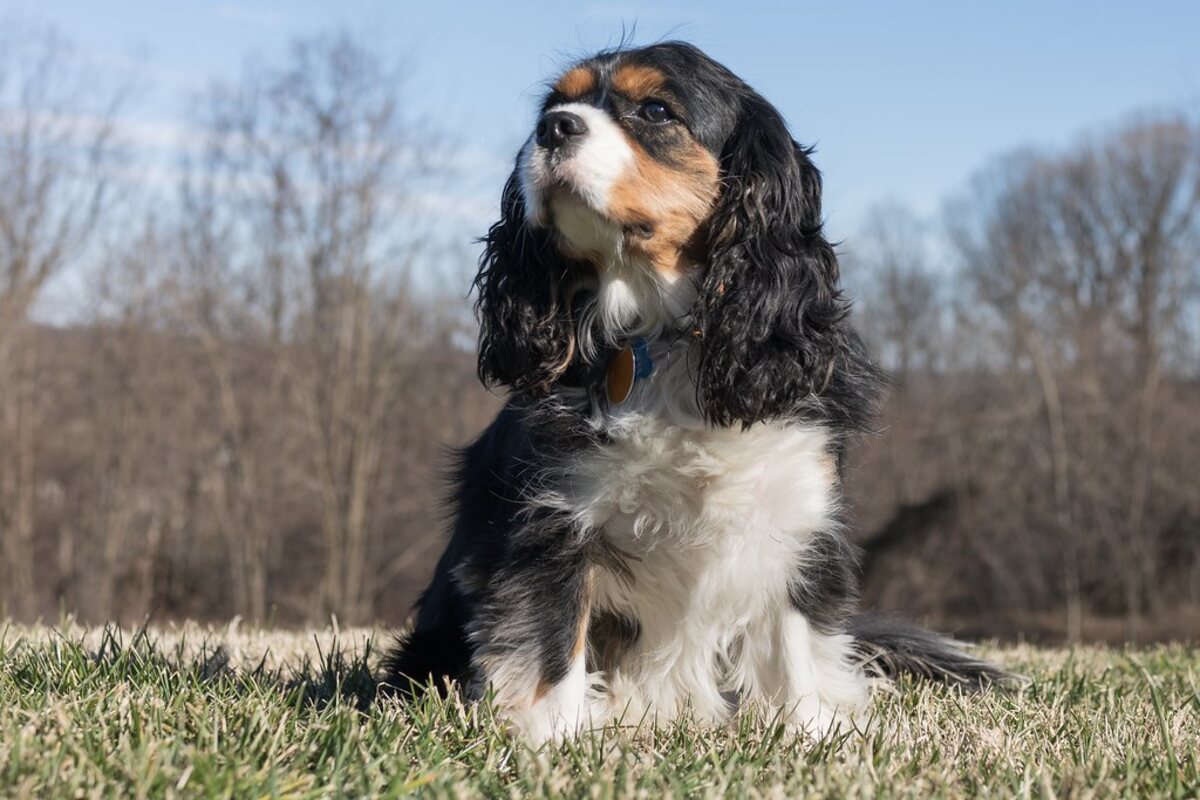
The Cavalier handles cold better than heat, but it is not a winter breed. The long coat looks like good insulation, but it is in fact single-layered, without the dense undercoat that keeps the northern breeds warm.
This article explains how much cold the breed tolerates, when a coat is needed, why pavement salt is a bigger problem than the temperature itself, and what changes in care over winter.
How much cold it tolerates
A grown, healthy Cavalier walks normally even at temperatures around freezing. Below that, walks get shorter, and below minus five they become short and require a coat.
A few dogs cope worse than average:
- puppies, which do not yet regulate body temperature as an adult dog does
- older dogs, especially with arthritis — cold worsens joint pain
- dogs with a heart condition, because cold increases the load on the heart
- dogs recently clipped or in a period of heavy shedding
There is no exact temperature below which you do not go out. The dog shows it itself: shivering, lifting a paw, a hunched posture and trying to head home are the sign that it is enough.
Does it need a coat
In this breed a coat is not a constant necessity, but there are situations where it makes sense:
- longer walks below freezing
- rain with cold — a wet coat loses all insulation
- an older dog or one recovering
- a puppy in its first winter
What to look for in a coat: that it covers the chest and belly, because most heat is lost there, that it does not press under the front legs and that it comes off easily. A waterproof layer for rain is worth more than thickness.
The coat comes off as soon as you get indoors. Under it, in the warmth, the dog quickly starts to overheat.
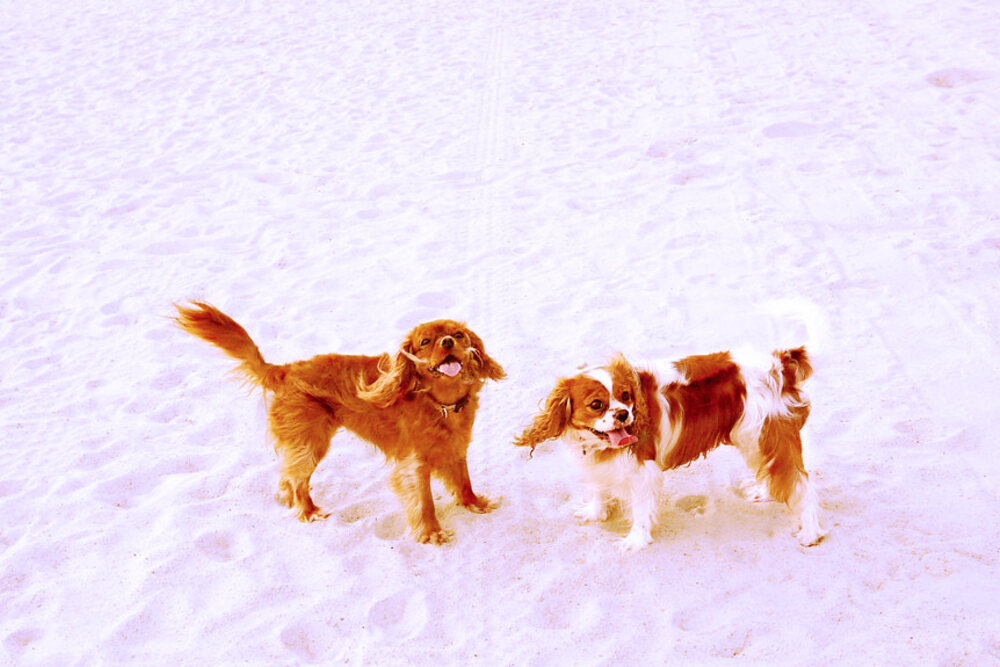
Road salt — the biggest winter problem
The salt spread on pavements irritates the skin of the pads, causing stinging, redness and cracking. In this breed the problem is bigger than in short-coated dogs, because salt and ice catch in the hair between the pads and stay there.
What to do:
- trim the hair between the pads before winter, with round-tipped scissors
- after every walk the paws are rinsed with lukewarm water and dried, not just wiped
- check between the toes — ice balls collect there
- protective paw wax before the walk helps, but does not replace washing afterwards
- booties work best, if the dog agrees to wear them
The dog must not lick its paws before they are washed. Salt that is swallowed causes vomiting and diarrhoea, and in a small dog more serious disturbances as well.
Snow
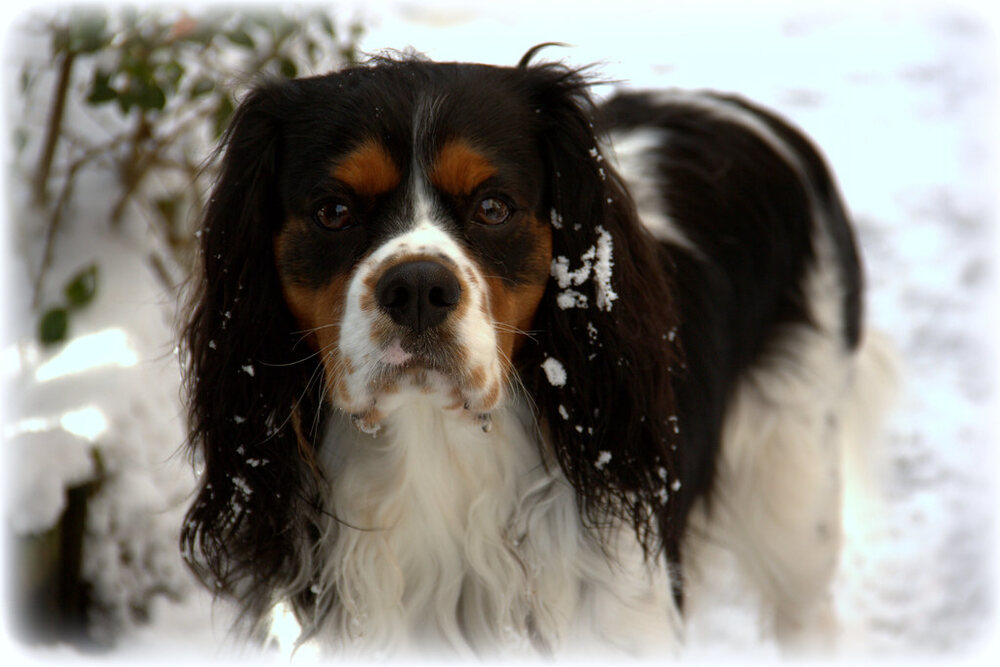
Most Cavaliers love snow and it is a good chance for exercise. Two things to bear in mind:
The dog should not eat snow. Besides chilling the stomach, snow along the road contains salt and antifreeze residue.
Antifreeze is lethally toxic, and dogs find it sweet and lick it readily. Puddles in garages and car parks are a real winter hazard. Suspected antifreeze is an emergency, with no waiting.
What changes in care
- More frequent brushing. In winter the coat tangles more easily from damp and clothing, especially under the front legs where the harness or coat rubs.
- Less frequent bathing. Heating already dries the skin; bathing makes it worse.
- Drying is compulsory after a wet walk, right through, especially the ears and chest.
- Humidity indoors. Dry air from heating causes flaking and scratching. A bowl of water on the radiator helps.
Exercise and food in winter
Winter walks are often shorter and the dog spends more time in a warm home. The result is less energy spent on the same amount of food, so winter is when Cavaliers most easily put on excess weight.
In a breed with a known cardiac risk, excess weight is not a cosmetic matter. If walks get shorter, the amount of food is adjusted, and the difference is made up with play and exercises indoors.
When to see a vet
- pads cracked, red or bleeding
- the dog limps after a walk on salt
- persistent paw licking
- shivering that does not stop even after the dog warms up
- any suspicion that the dog has licked antifreeze — immediately, without delay
Conclusion
In winter a Cavalier handles shorter walks around freezing without trouble, and needs a coat for longer spells in the cold, in rain and in old age. A bigger problem than the temperature is pavement salt: the hair between the pads is trimmed, and after every walk the paws are washed with lukewarm water and dried. Winter is also when excess weight comes on most easily, so the amount of food is tracked alongside the length of the walks.
Note: this article is informational and does not replace examination and advice from a veterinarian.