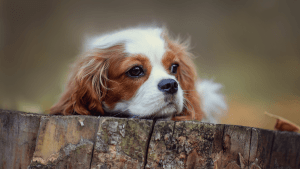
A Cavalier is considered a senior dog from roughly the age of seven. That does not mean it is old — many dogs are in full strength then — but that from that point what you watch for changes.
This article explains what changes in the body and behaviour, what changes in care and feeding, which examinations should be done more often and how to tell ageing from illness.
Why the seventh year in particular
It is not a turning point but an agreed boundary. In small breeds a dog is considered senior from seven to eight years, while in large breeds that boundary comes earlier.
In the Cavalier that year has a special significance for one reason: mitral valve disease is most often detected in this breed precisely in that period. The heart check, which until then was a recommendation, becomes something you do not skip.
What changes in the body
- The joints. Arthritis comes on gradually and first shows as getting up more slowly in the morning, not as limping.
- The muscles. They are lost if exercise is reduced, and less muscle means more strain on the joints — a cycle that is easily set in motion.
- The heart. A murmur that was not there before, or that has grown louder. In this breed it is monitored annually.
- Sight and hearing. They weaken gradually. A dog that “stops listening” often simply hears less well.
- Teeth. Years of neglect come due right now.
- The coat. It becomes thinner and drier, and grey appears around the muzzle.
- The metabolism. It slows down, so the same food produces more weight.
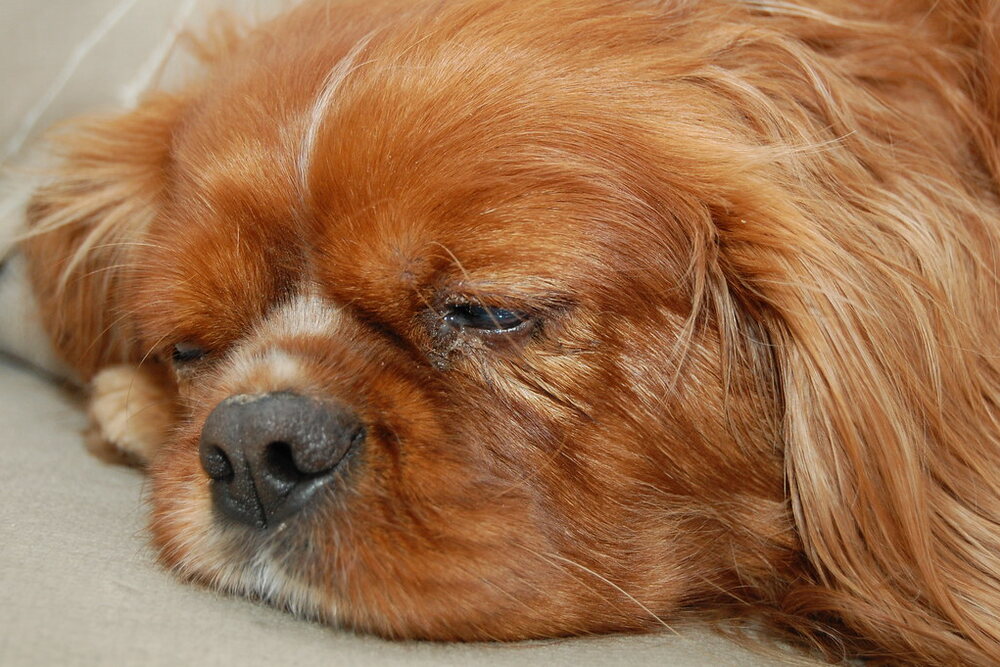
Examinations: what changes in the rhythm
Instead of once a year, in a dog over seven you move to an examination every six months. The reason is not fear but the fact that in an older dog a great deal changes within less than a year.
What to do:
- a heart examination — listening at every visit, and in this breed a cardiology examination as recommended by the vet
- basic blood and urine tests, for kidney and liver function
- weighing at every visit, because gradual loss is easily overlooked
- pregled zuba
- a skin examination and feeling for lumps, which appear more often in older dogs
It is also worth knowing that vaccination and parasite protection are still needed. An older dog has weaker immunity, not stronger.
Exercise
The biggest mistake is cutting back on walks. A dog that stops moving loses muscle faster and declines faster.
What changes is not the amount but the distribution: the same total time, but split into more short outings and at a slower pace. Instead of one half-hour walk, three of ten minutes.
The rest:
- regularity matters more than before — a little every day, never a lot all at once
- a soft surface, grass instead of asphalt where possible
- avoid jumping and long flights of stairs
- shorter in winter, because cold worsens joint pain
- games for the head become more important, because the body no longer takes the strain while the dog still wants a job
Diet
In an older dog three things most often change.
The amount. Because of the slower metabolism it is reduced, and the weight is measured monthly. Excess weight in a dog with a heart murmur is not harmless.
The composition. Senior food has a different balance of ingredients. In a dog with a kidney or heart condition the vet prescribes a special food, and it is not changed on your own initiative.
The way it is fed. A dog with bad teeth eats more easily if the dry food is moistened a little. Several smaller meals are better than one big one.
Loss of appetite in an older dog is never put down to age. That is a reason for an examination.
Care
- More frequent brushing, because a thinner coat tangles more easily and the dog grooms itself less.
- Nails more often, because they wear down less with shorter walks. A long nail in a dog that already stands poorly creates an extra problem.
- A bed with a better base — an orthopaedic bed genuinely makes a difference in a dog with arthritis.
- Runners on smooth floors. What is a recommendation in a young dog is a necessity in an older one.
- A ramp instead of jumping onto the sofa and into the car.
- Bathing less often, because the skin is drier, with thorough drying compulsory.

Changes in behaviour
In some older dogs changes appear that look like stubbornness but are not:
- confusion in familiar surroundings, standing in a corner
- day and night reversed — restless at night, sleeping by day
- recognising members of the household less well
- messing indoors in a dog that has been clean for years
- less attention-seeking or, conversely, more clinginess
In dogs this is called cognitive dysfunction and it is not something to be endured — there are medicines, supplements and changes in routine that help, and the results are better if you start early.
What is not normal ageing
These things are too often put down to age, and they are not age:
- kašalj, especially at night or after exertion — in this breed the first sign that calls for a heart check
- rapid breathing during sleep
- tiring quickly on the usual walk
- weight loss without a change of diet
- increased drinking and urination
- limping that lasts more than a few days
- a lump that grows or changes appearance
- gubitak apetita
“He has got old” is not a diagnosis. Most of what gets explained that way has a cause that can be eased.
Quality of life
In a dog’s late years the question stops being how long it will live and becomes how it lives. It helps to track simple things: does it eat with pleasure, does it look forward to the walk, does it sleep peacefully, is it in pain, does it still seek company.
In a breed this attached to people, closeness itself is part of the care. An older Cavalier spends more time leaning against you than playing, and that is the normal course of things, not a loss.
Conclusion
After the age of seven a Cavalier’s check-ups move to every six months, above all because of the heart, and walks are not shortened but split into several short ones. Food is reduced because the metabolism slows, and the bed, the runners and the ramp become a real necessity. The most important rule is that coughing, tiring, weight loss and confusion are not put down to age — these are signs with a cause, and in most cases the cause can be eased.
Note: this article is informational and does not replace examination and advice from a veterinarian.